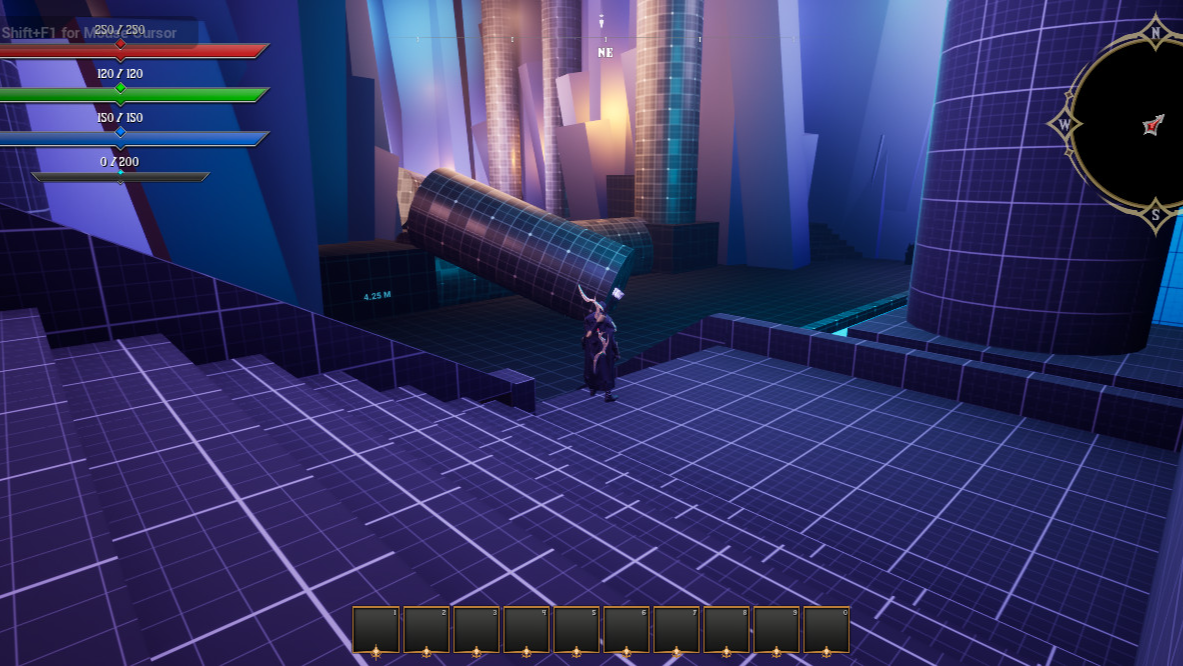
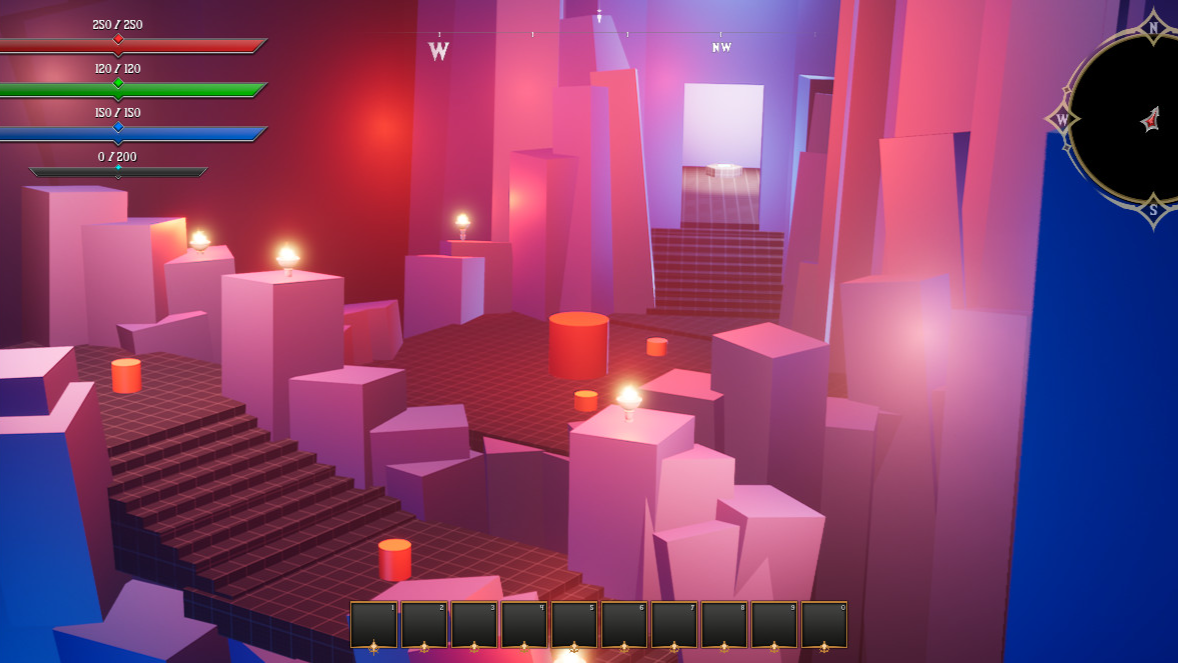
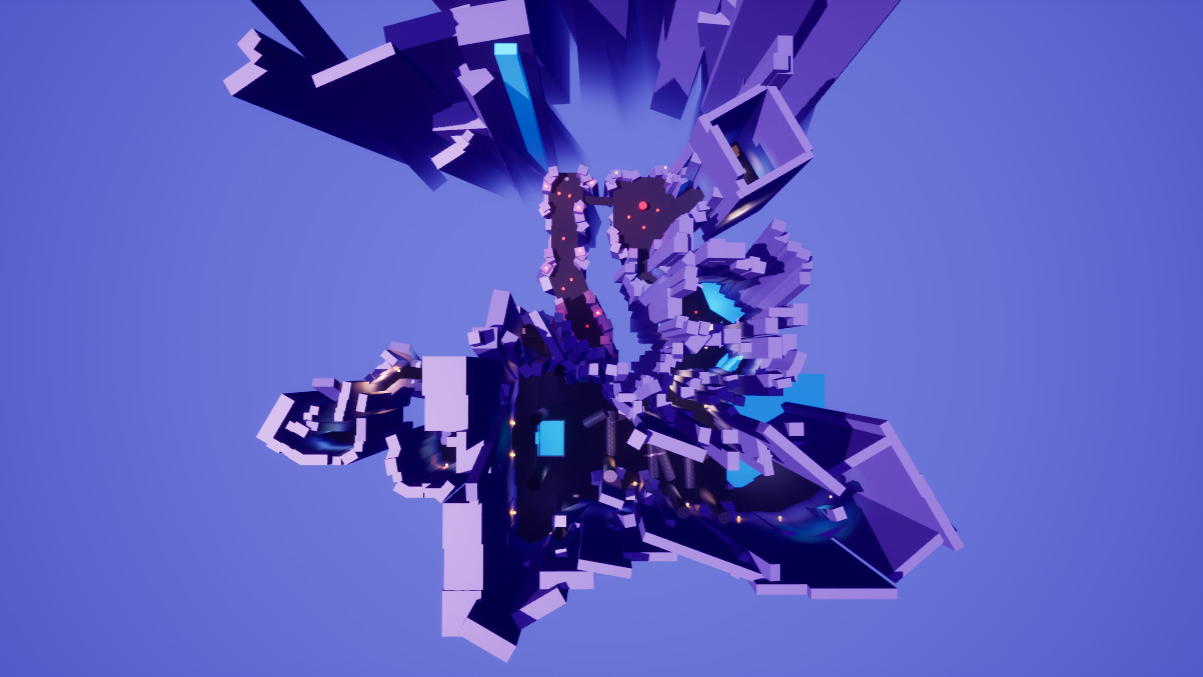



Runehelm

Skip To...
    Add a header to begin generating the table of contents

    Overview

    Goal

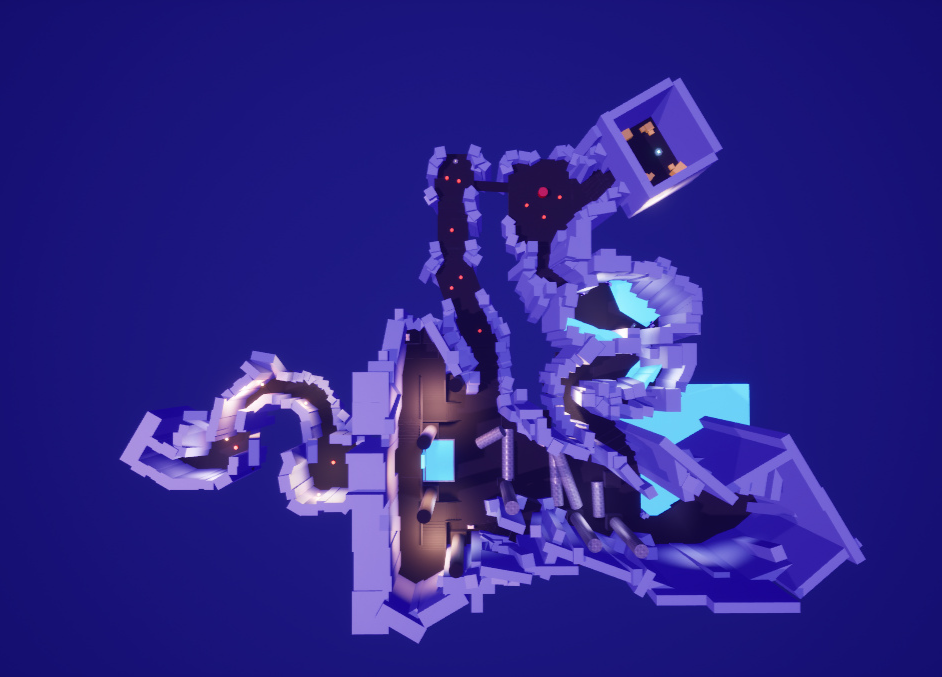
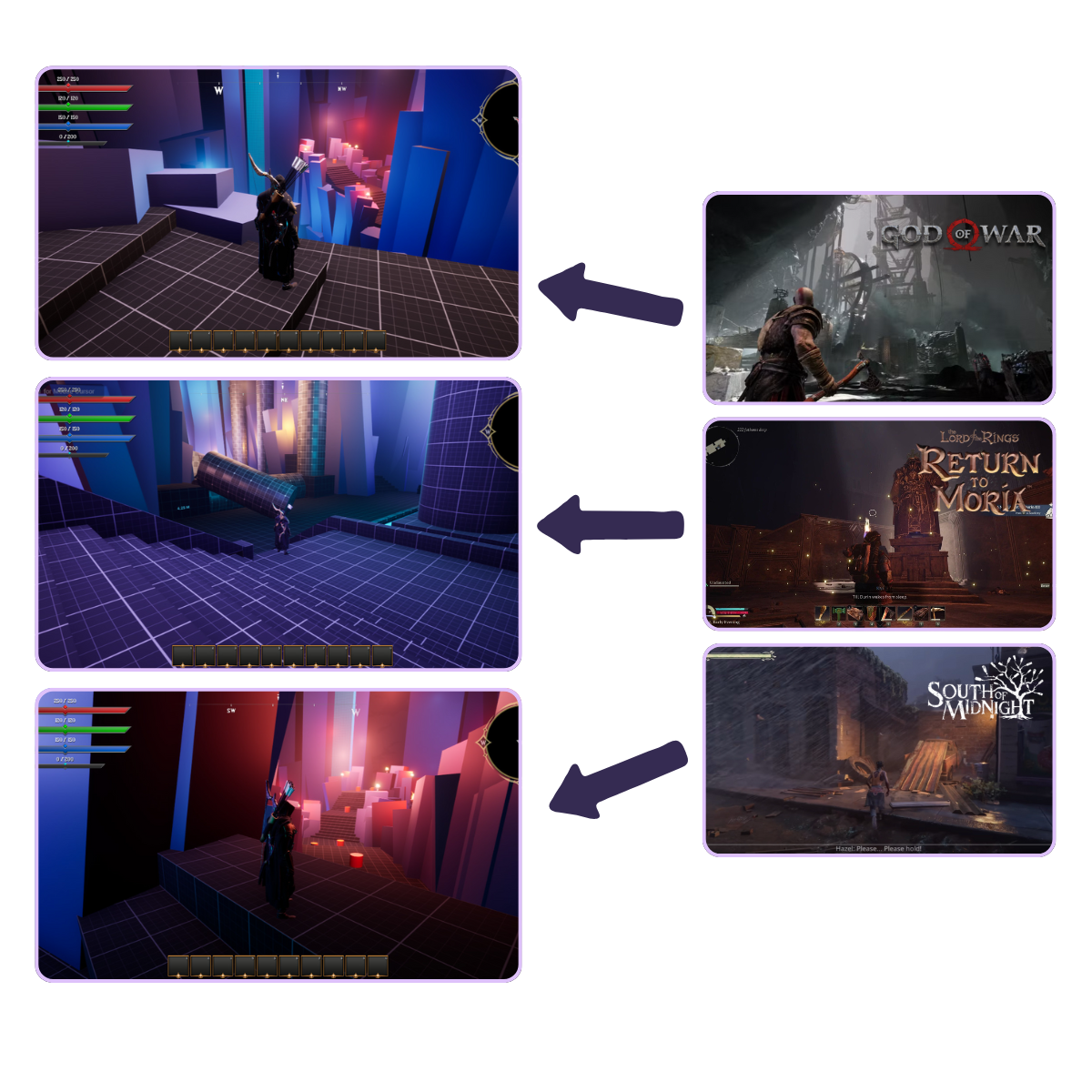
    Runehelm is a action-adventure level inspired by the power metal song Keeper of the Seven Keys (Helloween) and shaped by the narrative, traversal, and combat design philosophies of God of War (2018), Return to Moria, and South of Midnight. Players take on the role of a lone seeker journeying through the crystal mountain of Runehelm in search of the Map of the Seven Keys, hidden deep within the royal vault.

    This project allowed me to practice: 

    • Narrative-Driven Environmental Storytelling
    • Enemy Placement and Encounter Design
    • Player Guidance and Level Traversal
    • AAA Preproduction Workflows and Techniques

    Alongside this project, I completed a Level Design Bootcamp led by Nathan Kellman (Diablo IV), with mentorship from Jordan McMorris (Elements) and Brandon Dolinski (Dragon Age, Tomb Raider). Their mentorship deepened my approach to preproduction, emphasizing research, beat sheets, 2D mapping, and level design documentation.

    Level Overview & Technique Highlights

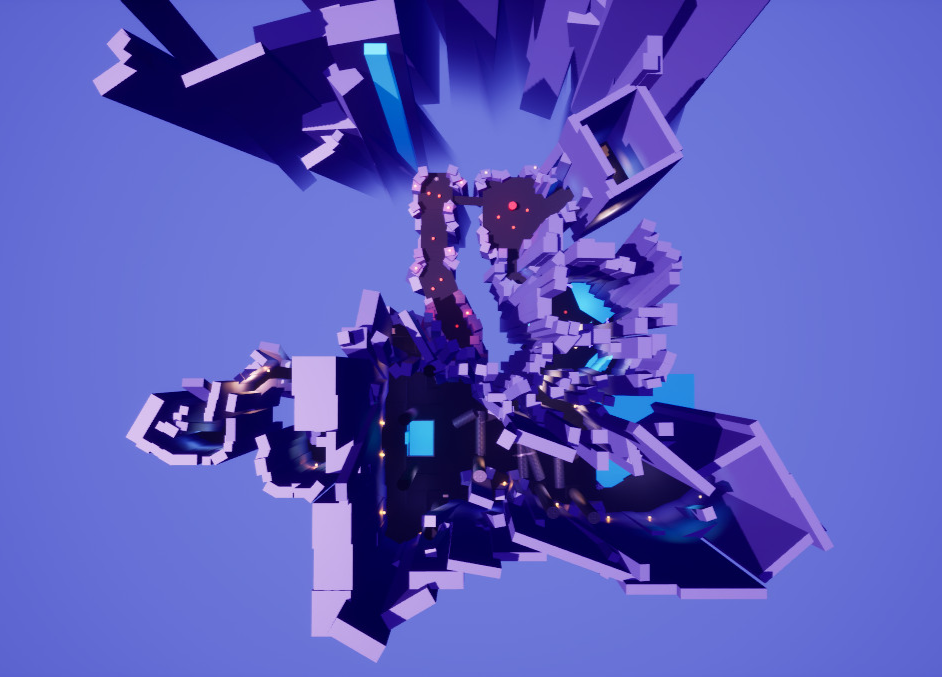
    Setting/synopsis: Deep within the crystal mountain of Runehelm lies an ancient dwarven citadel. Players take on the role of a lone seeker tasked by the king to recover the lost Map of the Seven Keys, hidden in the royal forge vault before its power falls into the wrong hands.


    Along the journey, the seeker battles golems of lava and stone, solves rune puzzles, and navigates decayed terrain shaped by centuries of ruin. Guided by fragments of lore and echoes of a fallen civilization, players experience a somber adventure of deliberate combat, environmental storytelling, and puzzle-solving.

    Narrative-Driven Environmental Storytelling

    Technique & Use-case Environmental storytelling is used to immerse the player in the history and culture of the fallen dwarven citadel of Runehelm. By embedding puzzles, landmarks, and remnants of labor within the environment, the player uncovers lore naturally through exploration and interaction.

    Context of use-case The design aims to create an atmosphere of discovery where every element tells part of Runehelm’s story. Lighting, environmental placement, and interactive puzzles support the tone of a forgotten world scarred by collapse, inviting the player to piece together its history while pursuing the myth of the Seven Keys.

    Technique Detail:

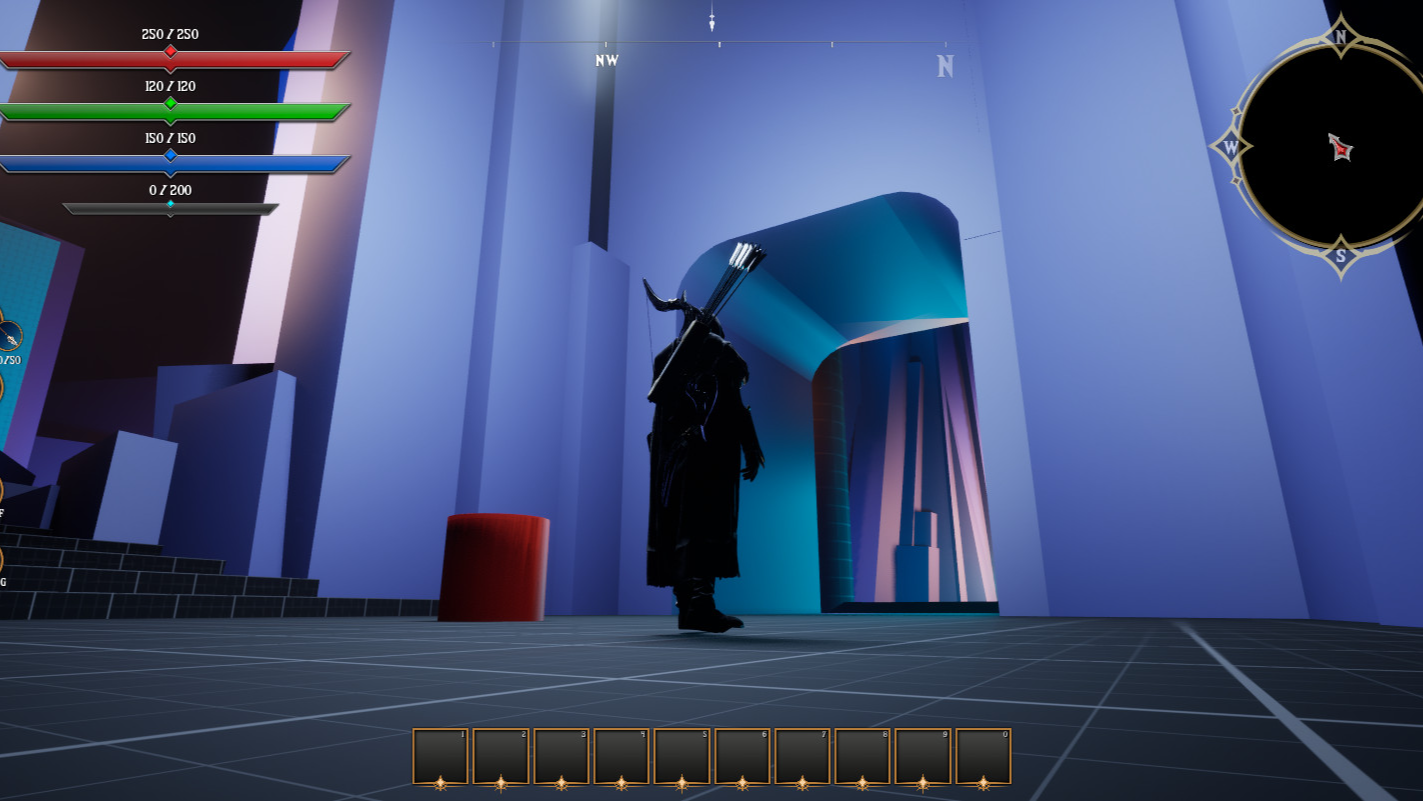
    • Level Element 1 – Rune Doors and Keys: Scattered throughout the level, rune doors require the player to solve mechanical puzzles with keys found in the environment. These doors symbolize the dwarves’ reliance on runic craft and serve as gateways into deeper, more guarded parts of the citadel.
    • Level Element 2 – Giant Dwarven Statues: Towering statues, some shattered and others intact, embody the dwarves’ once-proud craftsmanship and faith in their legacy. Their fallen forms remind the player of a civilization undone, while those still standing reinforce the weight of tradition and myth.
    • Level Element 3 – The Vault: Hidden deep within Runehelm lies the untouched vault, filled with gold and treasure. Among the wealth lies the Map of the Seven Keys. This space reflects the dwarves’ obsession with riches and preservation, contrasting the decay elsewhere in the citadel.
    • Level Element 4 – Mine Carts and Crystal Waterfalls: Near luminous crystal falls, derailed mine carts and broken tracks show how Runehelm once thrived with mining activity. This detail grounds the citadel in realism, emphasizing its fall from industry and prosperity into ruin.

    Enemy Placement and Encounter Design

    Technique & Use-case Enemy encounters are paced to gradually introduce challenge and escalate tension as the player ventures deeper into Runehelm. Placement is designed to balance moments of discovery with combat intensity, reinforcing both narrative stakes and spatial progression.

    Context of use-case Encounters are integrated into the architecture and history of the citadel, ensuring that combat feels like part of the world rather than separate from it. Players learn through early, manageable fights, grow in confidence during the great hall skirmishes, and finally face a climactic test with the vault guardian before progressing further into the mountain.

    Technique Detail:

    • Level Element 1 – First Contact: On the path toward the great entrance hall, the player encounters one to two enemies. This subtle introduction provides challenge without overwhelming the player, offering a natural tutorial in combat mechanics while keeping the journey toward the citadel’s heart engaging.
    • Level Element 2 – The Enemy Platform: Inside the citadel, enemies are placed across staggered platforms and pathways, forcing the player to fight through multiple foes. This is the central combat arena of the level, designed to test the player’s adaptability and endurance while providing a direct path toward the vault.
    • Level Element 3 – Vault Guardian (Mini-Boss Encounter): After retrieving the Map of the Seven Keys, the player is confronted by a powerful golem mini-boss. Blocking the only exit, the golem shatters the bridge the player crossed, raising the stakes of the battle. Defeating the guardian unlocks the next stage of progression, guiding the player into the crystal waterfall cavern.

    Vantage Point

    Technique & Use-case Vantage points are strategically placed to orient the player, build anticipation, and provide moments of visual storytelling. By allowing the player to see their objectives and challenges before reaching them, these views foreshadow upcoming encounters and reinforce a sense of scale within Runehelm.

    Context of use-case These overlooks immerse the player in the dwarven citadel’s grandeur while serving as natural guides through the environment. They balance player agency with direction, ensuring exploration feels purposeful without relying on overt markers or UI indicators.

    Technique Detail:

    • Level Element 1 – Overlook on the Path: While traveling toward the great entrance hall, the player discovers a natural overlook. From here, they can clearly see the enemy platforms leading up to the vault and the vault itself in the distance. This moment foreshadows the journey ahead, creating a strong sense of destination.
    • Level Element 2 – Forewarning near Dwarven Statues: Near the colossal dwarven statues, just before the enemy platforms, the player reaches another vantage point. From this position, the full scope of the challenge is revealed as enemies crowd the path ahead. This deliberate framing gives the player a chance to mentally prepare for the upcoming combat gauntlet while emphasizing the narrative scale of Runehelm’s fall.

    Walkthrough

    Skip to ↓
    5 Videos
    Beat Overview

    Beat 1: Spaceport

    Beat summary, Lorem ipsum dolor sit amet, consectetur adipiscing elit, sed do eiusmod tempor incididunt ut. Lorem ipsum dolor sit amet, consectetur adipiscing elit, sed do eiusmod tempor incididunt ut.
    Process Breakdown

    Overview

    1. Research, Ideation & Planning

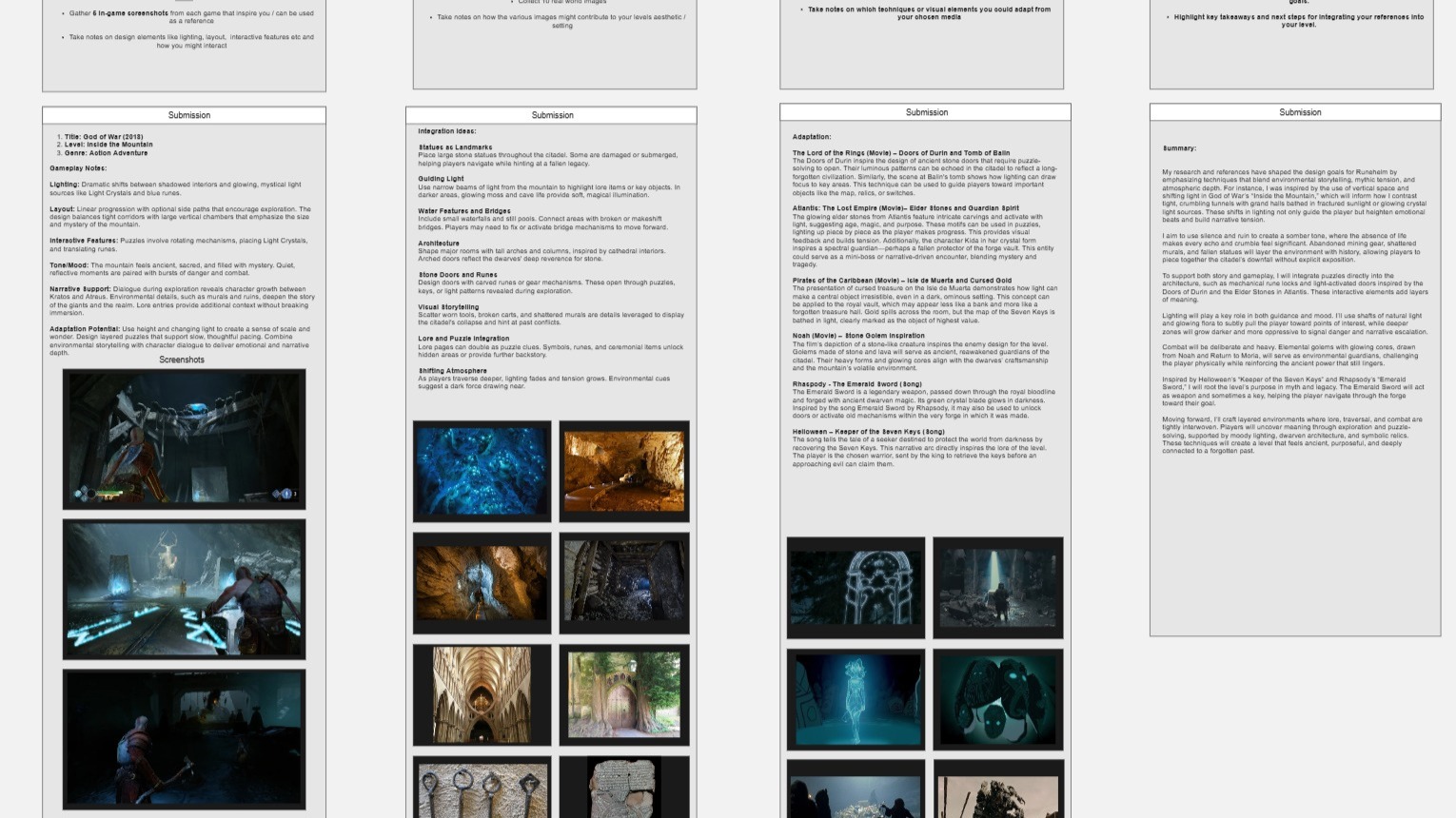
    My research and references shaped the design goals for Runehelm by emphasizing environmental storytelling, mythic tension, and atmospheric depth. The goal is to create layered spaces where lore, traversal, and combat interweave naturally.

    • Analyzing Games: I drew inspiration from God of War (2018) for its use of vertical space and lighting shifts, Return to Moria for its sense of ruin and survival in dwarven spaces, and South of Midnight for its atmospheric tone. These references inform how Runehelm balances tight tunnels, vast halls, and combat encounters that feel weighty and deliberate.
    • Researching Real-World References: I looked to mining history, dwarven folklore, and mythic structures for inspiration. Abandoned tools, shattered murals, and architectural relics help communicate Runehelm’s downfall without explicit exposition, layering the environment with history.
    • Exploring Other Media: Musical inspiration such as Helloween’s Keeper of the Seven Keys and Rhapsody’s Emerald Sword informed the level’s mythic purpose. These works inspired me to weave themes of legacy and power into Runehelm, where relics like rune locks, light puzzles, and enchanted weapons act as both narrative symbols and gameplay mechanics.

    2. Level Design Document

    LDD: To keep track of progress and manage the project more effectively, I created the Level Design Document (LDD) in Miro for better visual readability. This included:

    • Level Goal
    • Narrative & Setting
    • Gameplay Mechanics
    • Enemy Pacing & Encounters

    Beat Sheet: I mapped out a beat sheet that outlined the player’s journey through Runehelm, covering puzzles, exploration, and combat. Each beat was categorized by intensity shifts such as exploration, puzzle-solving, traversal, combat (minor/major), narrative, and stealth. Visual color codes were used to highlight pacing and ensure smooth progression.

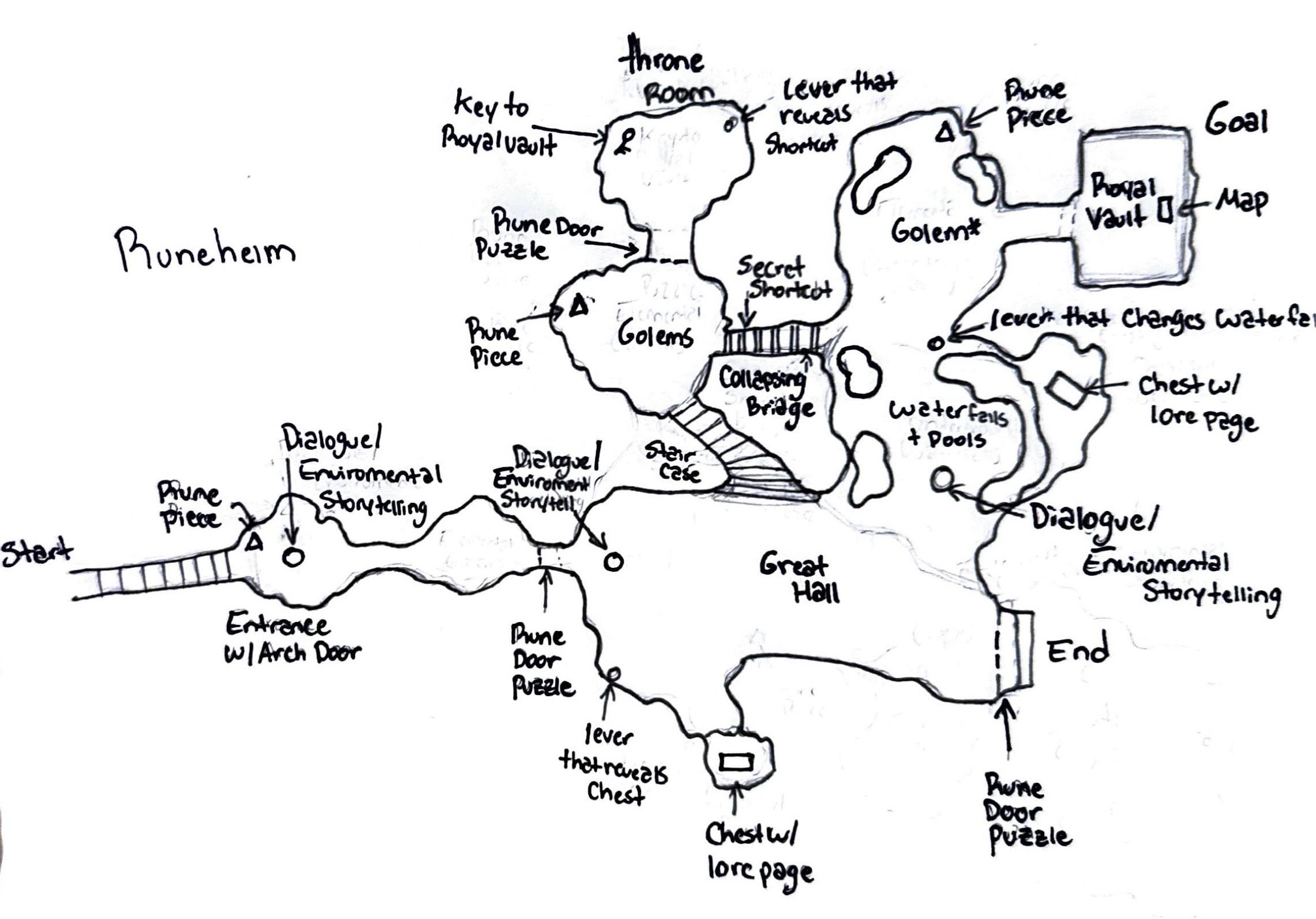
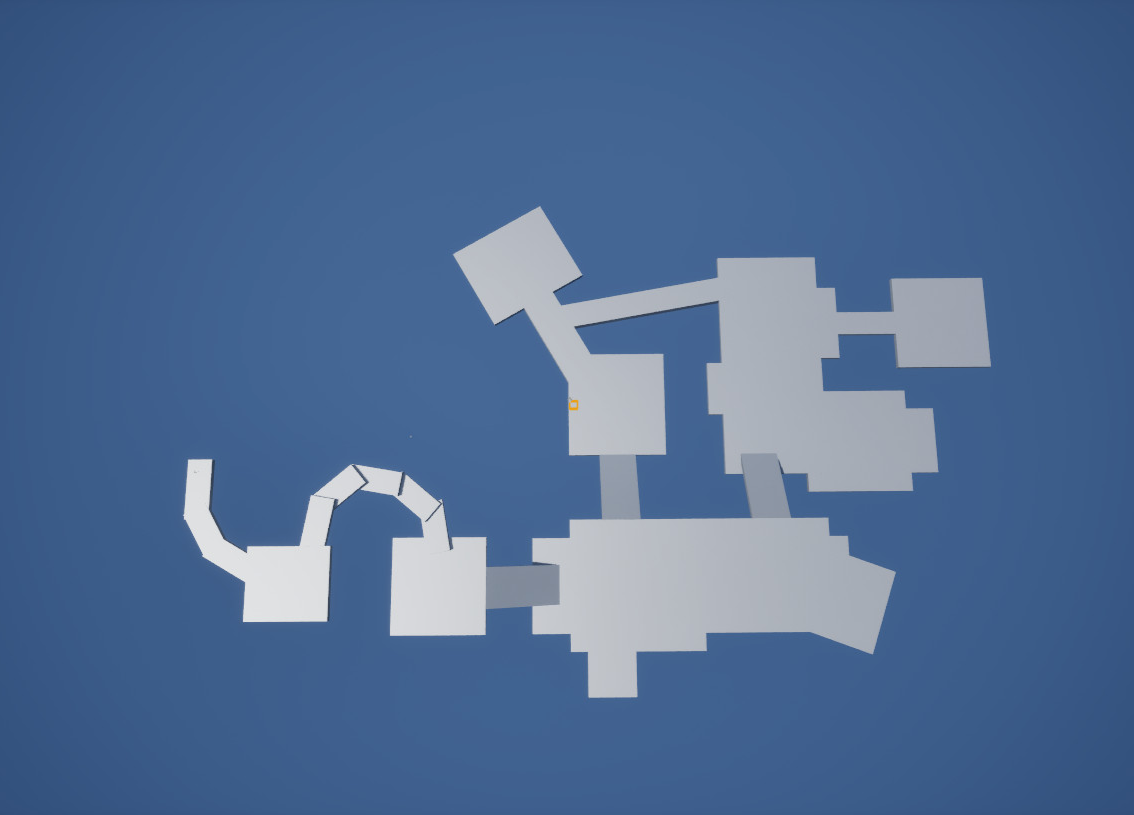
    2D Map layout: Inspired by RuneScape, I created a 2D map layout to plan dungeon exploration and points of interest. The map allowed me to quickly visualize routes, adjust player flow, and align beats across the space. This step streamlined the transition into 3D blockout, making layout changes easier to test and refine early in development.

    3. Roughout 1

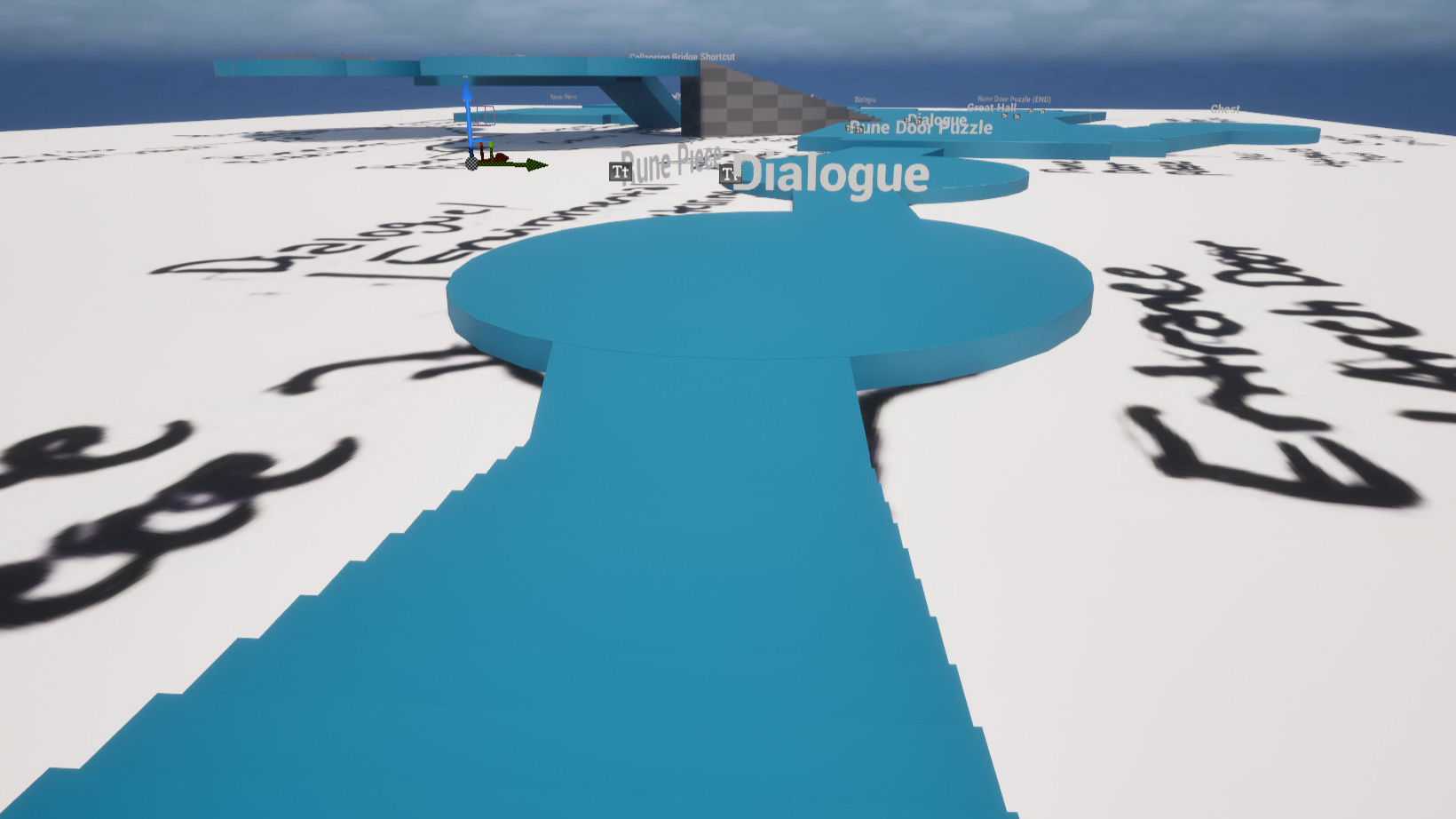
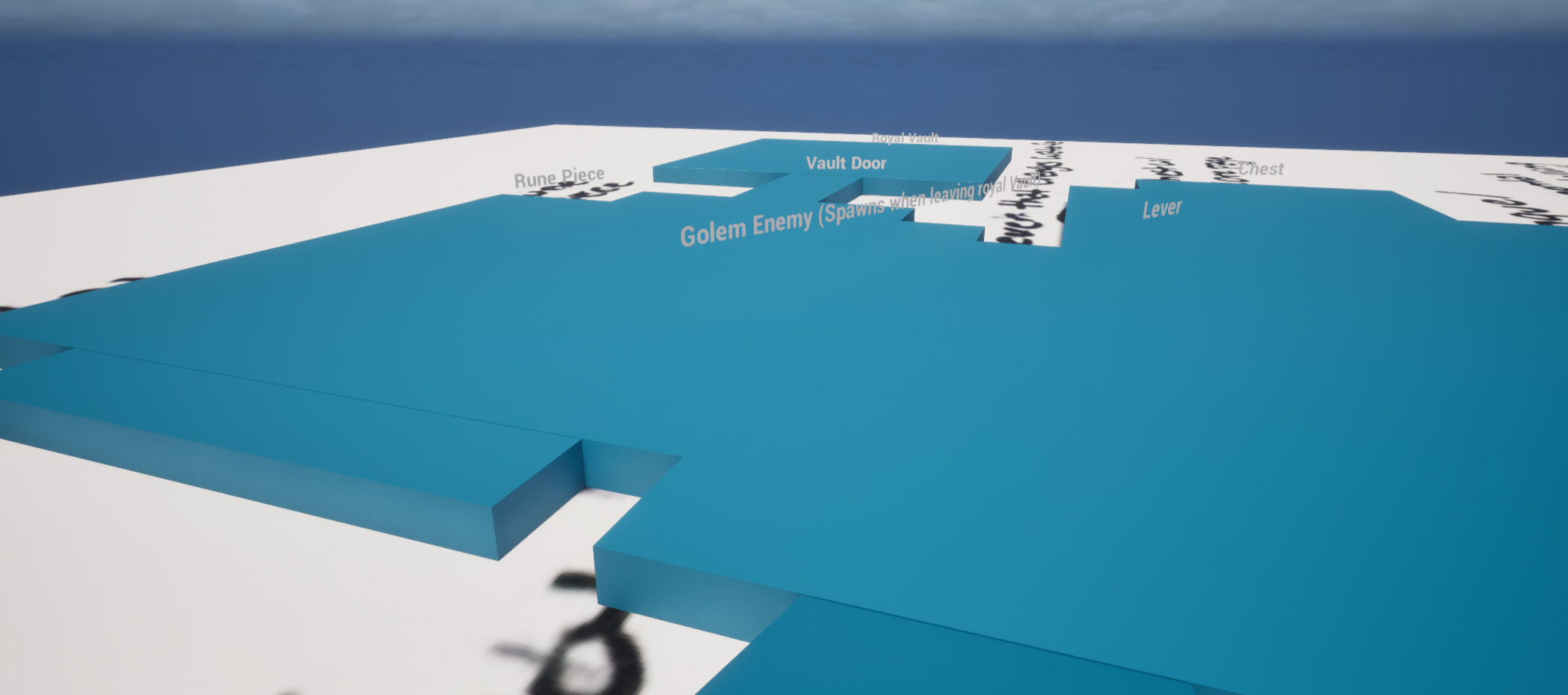
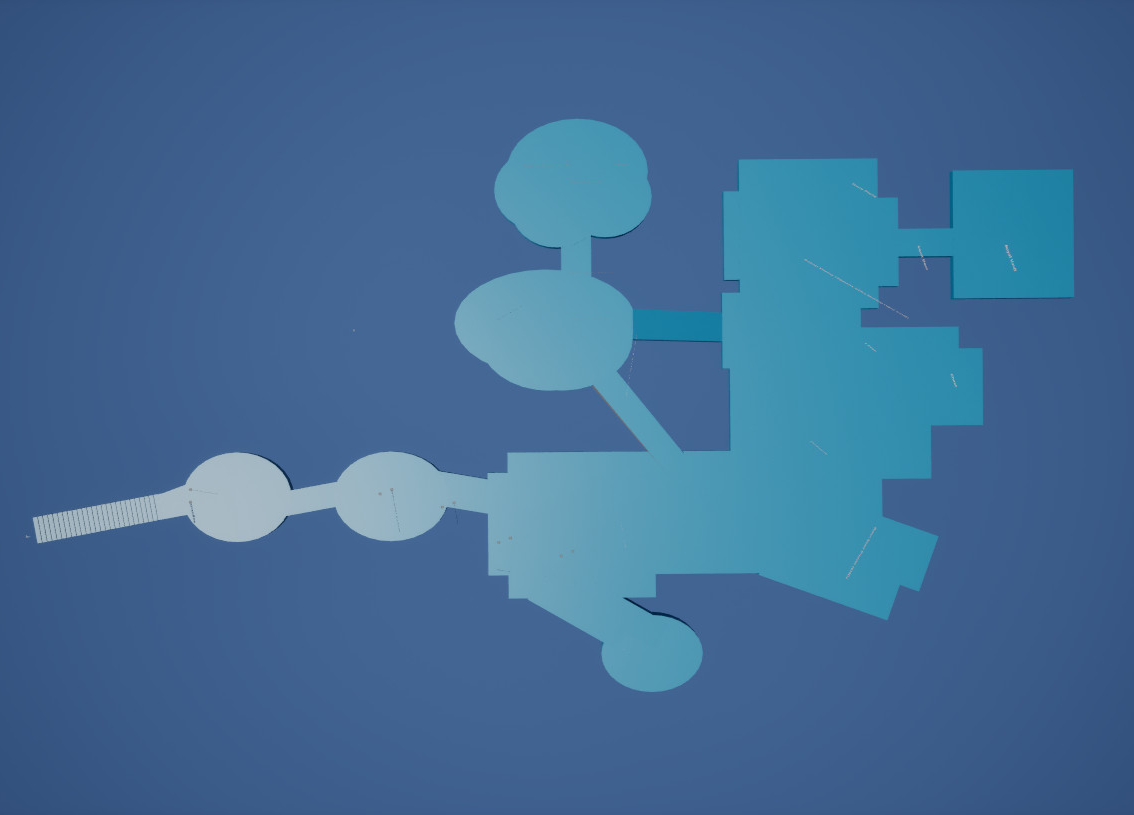
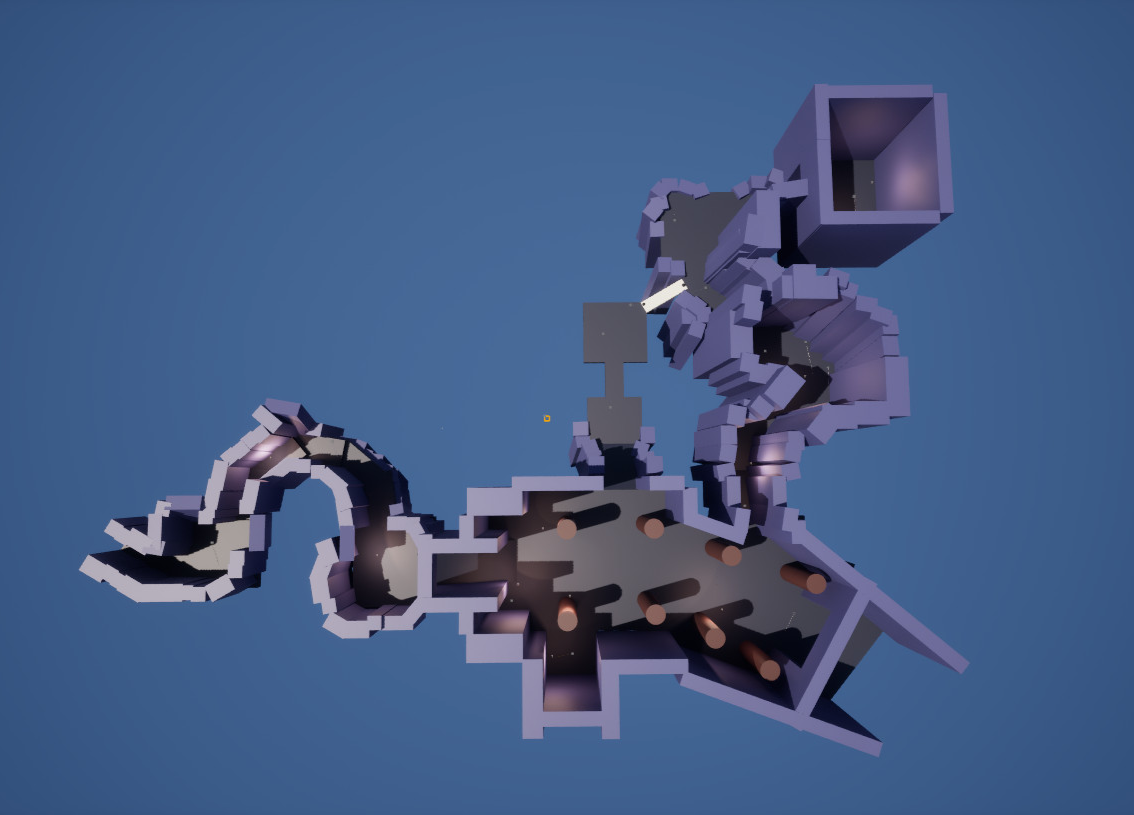
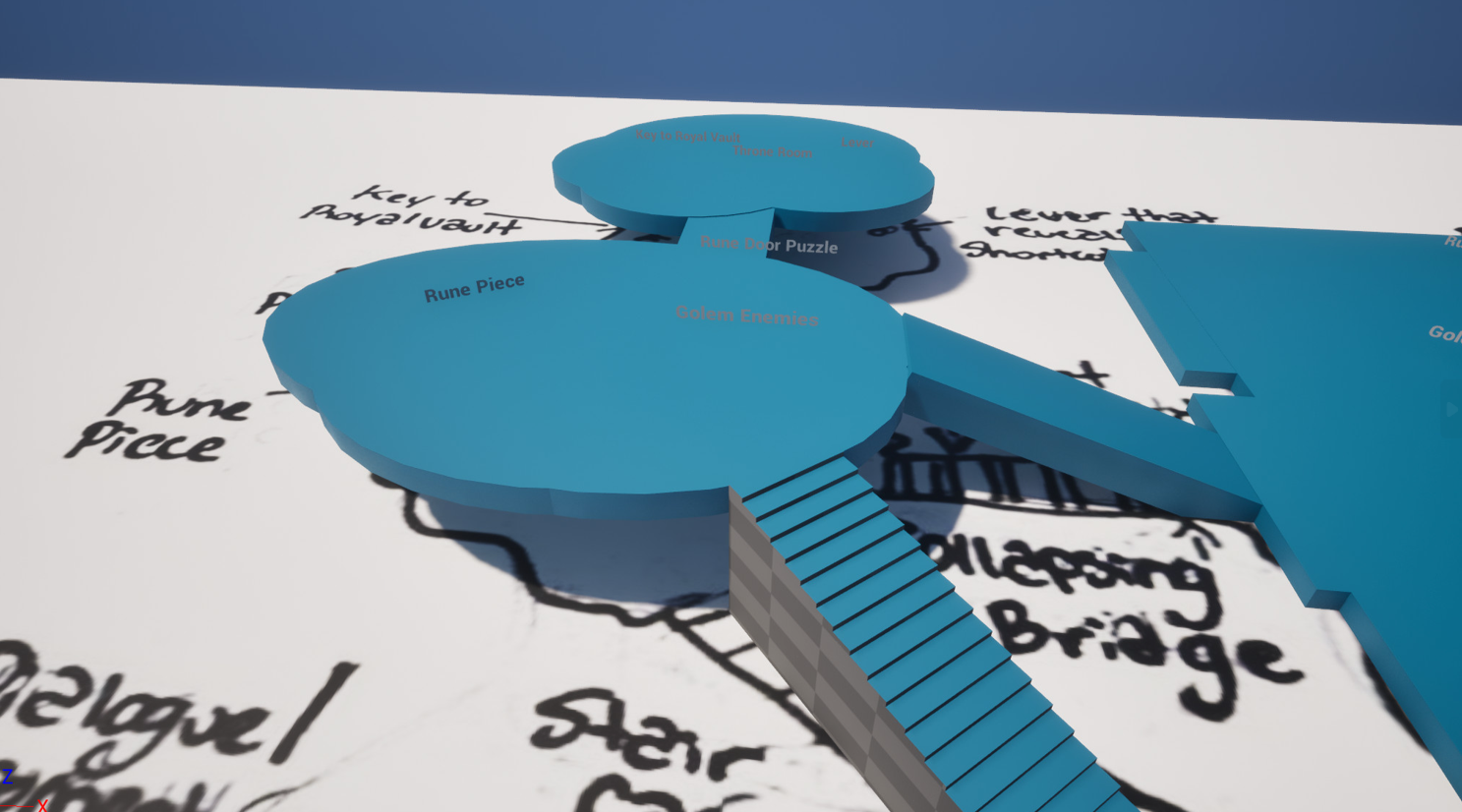
    Results: I translated my 2D map into 3D by applying the map image as a material, creating rough blockouts for rooms and narrow rectangles for paths to visualize traversal. This process revealed pacing issues, and I decided to reduce the rune puzzles from three to two. The adjustment streamlined progression and avoided overwhelming the player.

    Goal: The main goal was to test spatial flow and ensure traversal between points of interest felt natural. Reducing the number of rune puzzles addressed pacing concerns.

    Implementation/execution:
    The roughout phase used simple geometry to represent key spaces, ensuring the focus stayed on flow, scale, and player navigation rather than detail. Paths were iterated quickly until traversal felt intuitive and aligned with narrative beats.

    • Analyzing Games: I drew inspiration from games like God War (2018) and South of Midnight for its use of spacing.
    • Researching Real-World References: Castle interiors and partially collapsed chambers were studied to inform how dwarven spaces could feel both functional and atmospheric while hinting at their downfall.
    • Exploring Other Media: To support both story and gameplay, I will integrate puzzles directly into the architecture, such as mechanical rune locks and light-activated doors inspired by the Doors of Durin and the Elder Stones in Atlantis. These interactive elements add layers of meaning.

    4. Playtest & Iteration 1

    5. Roughout 2

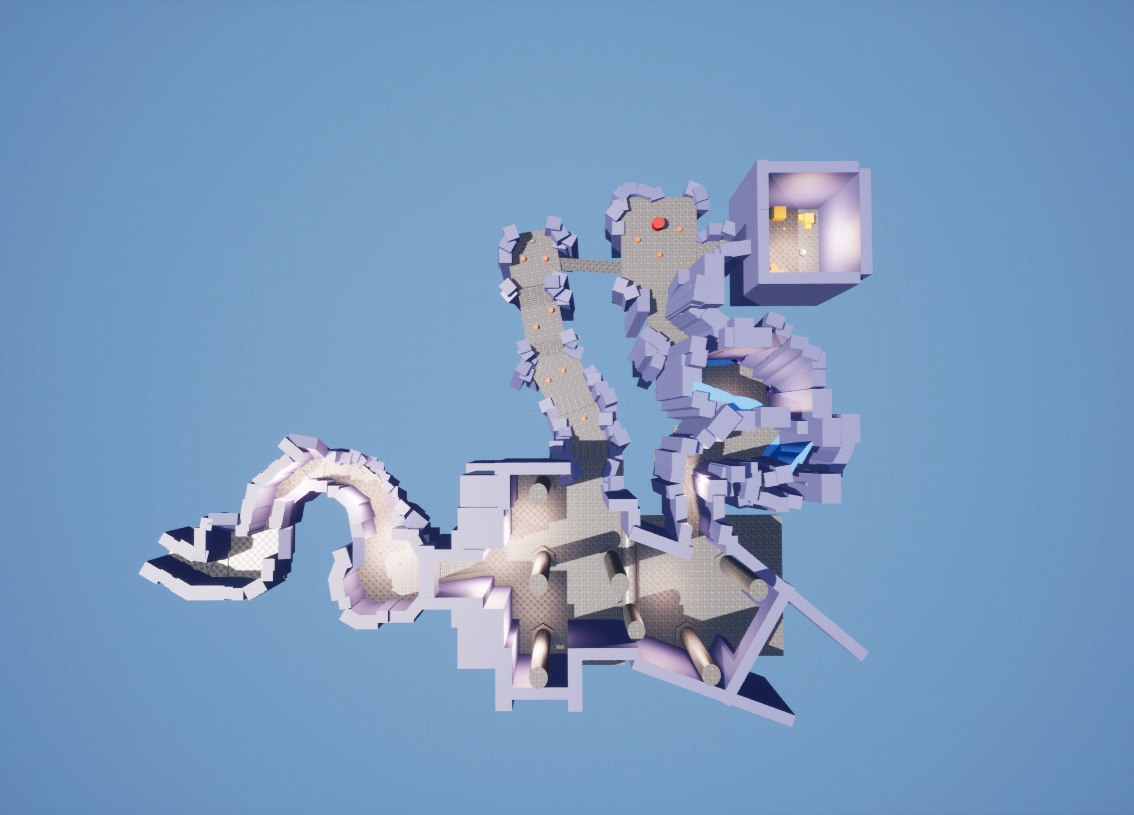
    Results: Talk about the result of your iteration for this part
    (call to action to the before/after image on the left)

    Goal: Go over what problem you’re addressing and why you’re addressing it

    (call to action to the feedback/playtest evidence)

    Implementation/execution:

    • Analyzing Games: I drew inspiration from games like Elden Ring, Baldur’s Gate 3, and The Legend of Zelda: Echoes of Wisdom to guide my level design.
    • Researching Real-World References: I studied castle interiors, especially damaged rooms, to help visualize my level’s spaces.
    • Exploring Other Media: I looked at Monster House and Howl’s Moving Castle for ideas on how to depict alive, moving buildings.

    6. Playtest & Iteration 2

    7. Roughout 3

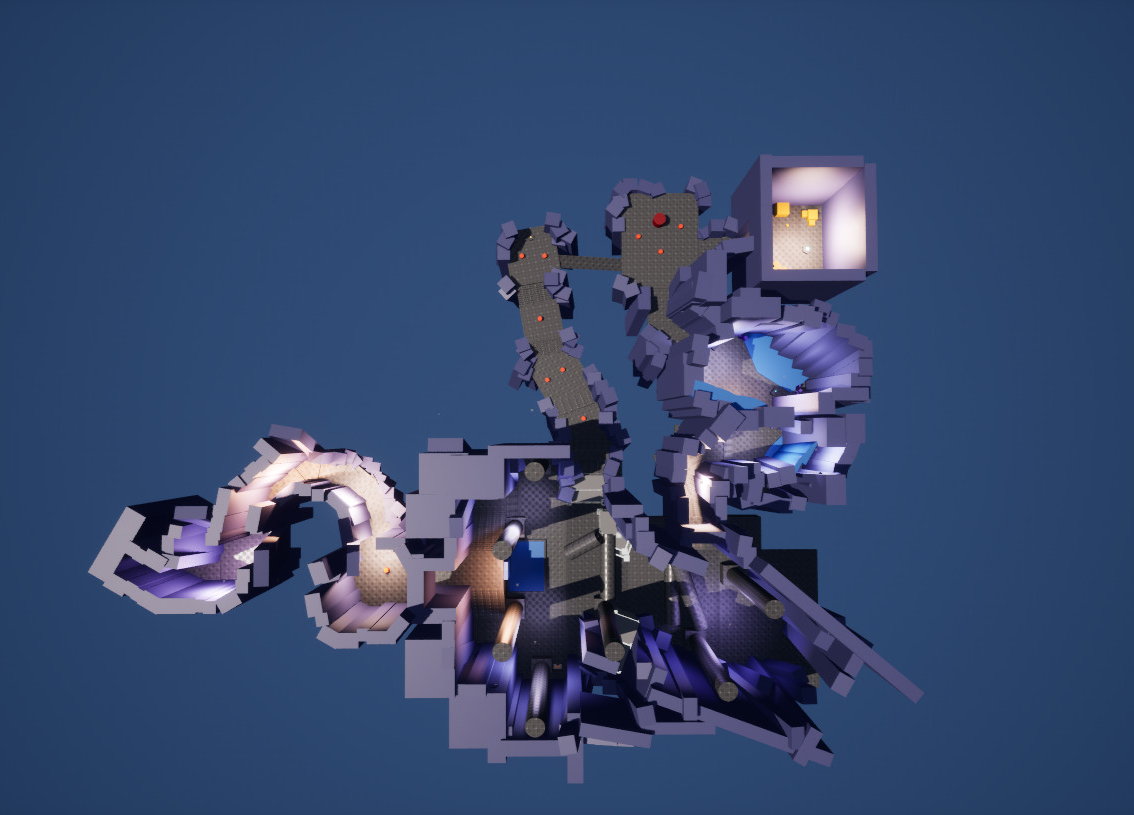
    Results: Talk about the result of your iteration for this part
    (call to action to the before/after image on the left)

    Goal: Go over what problem you’re addressing and why you’re addressing it

    (call to action to the feedback/playtest evidence)

    Implementation/execution:

    • Analyzing Games: I drew inspiration from games like Elden Ring, Baldur’s Gate 3, and The Legend of Zelda: Echoes of Wisdom to guide my level design.
    • Researching Real-World References: I studied castle interiors, especially damaged rooms, to help visualize my level’s spaces.
    • Exploring Other Media: I looked at Monster House and Howl’s Moving Castle for ideas on how to depict alive, moving buildings.

    8. Playtest & Iteration 3

    9. Roughout 4

    Results: Talk about the result of your iteration for this part
    (call to action to the before/after image on the left)

    Goal: Go over what problem you’re addressing and why you’re addressing it

    (call to action to the feedback/playtest evidence)

    Implementation/execution:

    • Analyzing Games: I drew inspiration from games like Elden Ring, Baldur’s Gate 3, and The Legend of Zelda: Echoes of Wisdom to guide my level design.
    • Researching Real-World References: I studied castle interiors, especially damaged rooms, to help visualize my level’s spaces.
    • Exploring Other Media: I looked at Monster House and Howl’s Moving Castle for ideas on how to depict alive, moving buildings.

    10. Playtest & Iteration 4

    11. Roughout 5

    Results: Talk about the result of your iteration for this part
    (call to action to the before/after image on the left)

    Goal: Go over what problem you’re addressing and why you’re addressing it

    (call to action to the feedback/playtest evidence)

    Implementation/execution:

    • Analyzing Games: I drew inspiration from games like Elden Ring, Baldur’s Gate 3, and The Legend of Zelda: Echoes of Wisdom to guide my level design.
    • Researching Real-World References: I studied castle interiors, especially damaged rooms, to help visualize my level’s spaces.
    • Exploring Other Media: I looked at Monster House and Howl’s Moving Castle for ideas on how to depict alive, moving buildings.

    12. Playtest & Iteration 5

    13. Roughout 6

    Results: Talk about the result of your iteration for this part
    (call to action to the before/after image on the left)

    Goal: Go over what problem you’re addressing and why you’re addressing it

    (call to action to the feedback/playtest evidence)

    Implementation/execution:

    • Analyzing Games: I drew inspiration from games like Elden Ring, Baldur’s Gate 3, and The Legend of Zelda: Echoes of Wisdom to guide my level design.
    • Researching Real-World References: I studied castle interiors, especially damaged rooms, to help visualize my level’s spaces.
    • Exploring Other Media: I looked at Monster House and Howl’s Moving Castle for ideas on how to depict alive, moving buildings.

    14. Playtest & Iteration 6